Depreciating Lives: From Young Sacrifices to Aging Social Costs
Recently, a quiet photo has been circulating on the Chinese internet, causing countless people to fall into a long, heavy silence in front of their screens. Under the cold glare of a street lamp, a gray-haired elderly woman sits alone on the freezing concrete pavement, her head buried deeply between her knees, with nothing but a small pile of blackening, unsellable bananas laid out in front of her. Beside her, the late-night city traffic continues to roar like a restless tide, and food delivery scooters dash past with deafening engine hums. The entire city, operating like a precise and relentless giant machine, moves forward with its cold, efficient logic, with not a single person slowing down even half a step for this small, huddled figure in the corner. Someone left a comment below the photo, noting that she, too, was once a cute baby girl held in her mother's arms. Who could have imagined that her life would end up this bitter; held as a tiny bundle as a baby, and now curled up as a tiny bundle at a street corner when old. This highly contrasting image strikes a chord deep within the hearts of ordinary people because it unreservedly tears open the cruel, slow-boiling destiny hidden behind a prosperous society.
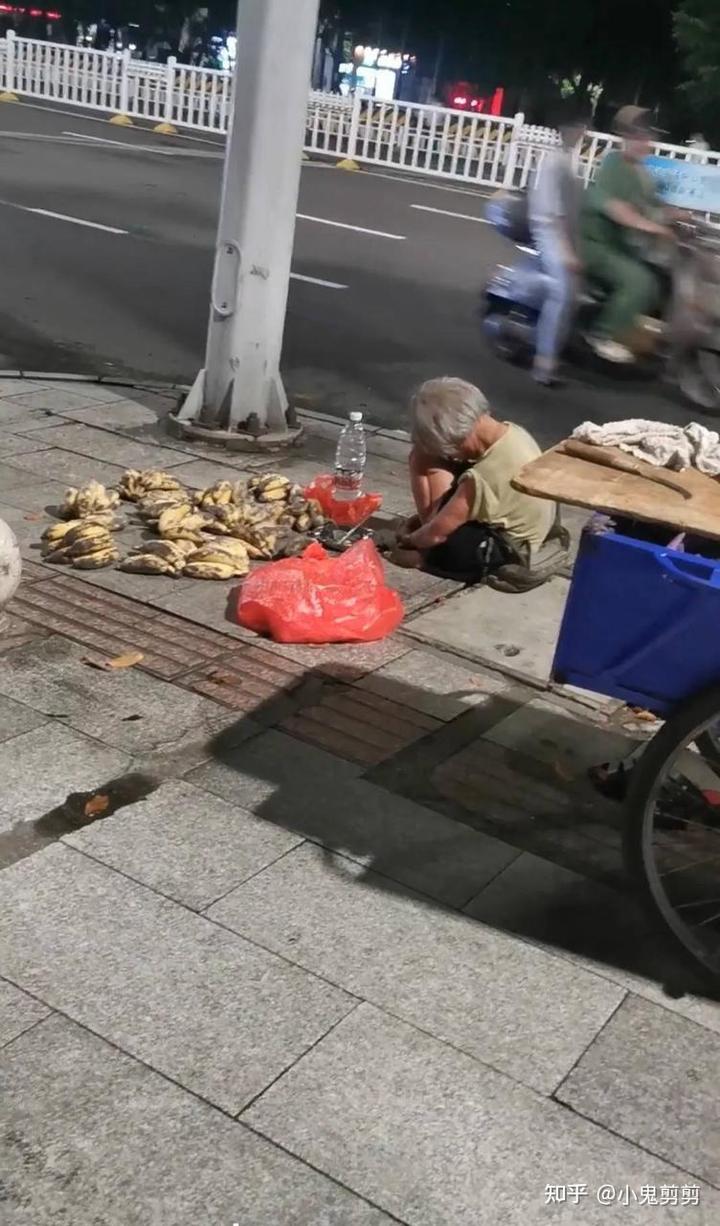
The education we receive from childhood and the slogans we are exposed to tell us to study hard, work hard, and make selfless sacrifices for society. It is as if by pouring our youth and sweat entirely into assembly lines, construction sites, or office cubicles, tomorrow will naturally become better. Yet, after these ordinary workers leave their health at construction sites, leave their youth on assembly lines, and exhaust the most valuable energy of their lives, their hair turns white, their backs bend, and their legs can no longer walk. When they look back, they realize they have long been like a burnt-out candle, leaving all the light and value to others, while the cold, hardened wax drips only onto their own scarred bodies. This calls to mind a deeply painful yet brutally honest observation: when a person is young, society tells them to make sacrifices; when they are old, society begins to look down on them as useless. The true logic of reality is often even more chilling than this statement.

In the years of youth, when physical energy is abundant and capable of providing an endless stream of surplus value, grand narratives love to talk to ordinary people about "personal value" and the "spirit of striving." High-intensity overtime and physical self-sacrifice are crowned with the loftiest praise. However, once people grow old and frail, unable to keep up with the efficient rhythm of this hyper-competitive society, the warm veil of sentimentality is instantly ripped away, and society begins to talk coldly about "social costs" and "fiscal burdens." Overwork in one's youth is called struggle and devotion, but sitting on the roadside selling fruit to survive when old is suddenly labeled as an eyesore that affects the city's appearance. An ordinary person who spent their entire life building the very foundations of this city finds, in their twilight years, that this fast-paced metropolis has run out of patience, refusing to grant even the small space needed for them to walk slowly.
What is more tragic than this structural despair is the pervasive, creeping numbness of modern society. Busy passersby glance occasionally at those curled-up figures in the corners, sigh "how pitiful" in their hearts, and immediately return their gaze to their phone screens flashing with dopamine-inducing light. Others might snap a photo, post it on social media with a caption about "life being too bitter," and after collecting dozens of cheap likes, proceed cheerfully to eat hot pot. Tomorrow's trending searches will bring fresh tears and outrage, and new topics will drown out old sighs, while the person sitting on the cold pavement remains there alone until completely swallowed by the night. In this long-term warm-water immersion, we have grown accustomed to delivery riders rushing through the midnight cold, septuagenarians sweeping the streets to make a living, and elderly folks sitting on curbs gasping for air. This indifference is not innate; rather, it stems from a shared, deep-seated anxiety. The thing we truly fear is never the helpless old person in the photo, but ourselves outside the photo, who burn our youth day in and day out in cubicles and assembly lines, and will eventually walk into the same inevitable twilight.